
If you're researching dental implants, you're probably asking yourself a version of the same question: are they actually worth it?
The short answer is yes, and the evidence goes back more than 60 years. At Carrollwood Village Dental in Tampa, FL, Dr. Richard Mancuso helps patients understand exactly what dental implants are, why they've become the gold standard for tooth replacement, and whether they're the right choice for your situation.
Here's what you need to know.
A Brief History: Why Implants Have Stood the Test of Time
Dental implants weren't invented by a dentist. They were discovered by accident.
In the 1950s, an orthopedic surgeon studying bone healing placed titanium chambers into rabbit femurs. When he went to remove them, he discovered something unexpected: the bone had fused so completely to the titanium that it couldn't be separated. The titanium had essentially become part of the skeleton.
That discovery sparked decades of research into what we now call osseointegration, the process by which titanium bonds with living bone. The first dental implant using this principle was placed in 1965 in a 34-year-old patient who had struggled with severe dental problems his entire life. He went on to live another 40 years with those same implants, eating, speaking, and living normally until his death.
That patient's story is not unusual. It's a testament to how durable and well-tolerated titanium implants are when properly placed. Today's implants benefit from more than six decades of research, refinement, and millions of successful placements worldwide.
How Dental Implants Actually Work

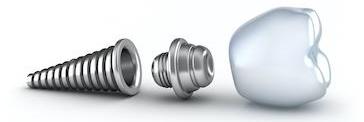
A dental implant is a small titanium post that is surgically placed into the jawbone, where it acts as an artificial tooth root. Over the following weeks and months, the bone grows around the implant and fuses to it through osseointegration, creating a stable, permanent anchor.
Once the implant has integrated, a connector piece called an abutment is attached, and then a custom-crafted crown, bridge, or denture is placed on top. The result is a complete replacement tooth that looks, feels, and functions just like a natural one.
The titanium post is the key to what makes implants so different from every other tooth replacement option. Because it's embedded in your jawbone, it stimulates the bone the way a natural tooth root does. That's something no denture or bridge can replicate.
Why Dentists Call Implants the Gold Standard
The term "gold standard" gets used a lot in dentistry, but in the case of implants, it's genuinely earned. Here's why Dr. Mancuso and dental professionals across the country recommend implants above all other tooth replacement options:
They Last Longer Than Any Alternative
With proper care, dental implants can last a lifetime. The titanium post itself rarely needs to be replaced. The crown on top may eventually need refreshing after 15 to 20 years, but the foundation beneath it is built to last decades. Compare that to traditional dentures, which typically need replacement every 5 to 7 years, and dental bridges, which average 10 to 15 years.
They Function Like Natural Teeth
Implants don't slip, click, or shift. You can eat whatever you want, speak without hesitation, and forget that your tooth was ever missing. Patients consistently tell us that after their implant is fully placed, they stop thinking about it entirely. It just becomes part of their mouth.
They Protect Your Jawbone
When a tooth is lost, the jawbone beneath it begins to resorb because it's no longer receiving stimulation from chewing. This bone loss is gradual but significant over time, and it's the reason many long-term denture wearers develop a sunken facial appearance.
Implants are the only tooth replacement option that prevents this. Because the titanium post mimics a natural root, your bone continues to receive the stimulation it needs to stay dense and healthy.
They Require No Special Maintenance
Implants don't need to be soaked overnight or removed for cleaning. You brush and floss them exactly like natural teeth. There are no adhesives, no special tablets, and no nightly ritual. For most patients, this simplicity is one of the most underappreciated benefits.
They Don't Compromise Adjacent Teeth
A traditional dental bridge requires grinding down the healthy teeth on either side of the gap to serve as anchors. Implants stand completely on their own. Your surrounding teeth are left completely intact.
Who Is a Candidate for Dental Implants in Tampa?
Most healthy adults are good candidates for dental implants. The key factors Dr. Mancuso evaluates at Carrollwood Village Dental include:
Jawbone density. You need sufficient bone to anchor the implant. Patients who have experienced bone loss may need a bone graft before proceeding, though this is a very common and manageable additional step.
Gum health. Active gum disease needs to be treated before implant placement. Healthy gum tissue is essential for a successful outcome.
Overall health. Certain medical conditions and medications can affect healing. Dr. Mancuso will review your full health history at your consultation to make sure implants are appropriate for you.
Non-smoker status (or willingness to quit). Smoking significantly increases the risk of implant failure. If you smoke, quitting before and after treatment is strongly recommended.
If you've been told in the past that you're not a candidate for implants, it's worth getting a second opinion. Advances in bone grafting and implant technology have made implants possible for many patients who were previously excluded.
Frequently Asked Questions About Dental Implants in Tampa, FL
How much do dental implants cost in Tampa? The cost depends on how many implants you need, whether any preparatory work like extractions or bone grafting is required, and the type of restoration placed on top. Dr. Mancuso will give you a detailed, personalized estimate at your consultation. We also discuss financing options to help make treatment fit your budget.
Does getting a dental implant hurt? The procedure is performed under local anesthesia, so you won't feel pain during placement. Most patients are surprised by how manageable the recovery is. Some soreness and swelling in the first few days is normal and typically resolves quickly with over-the-counter pain relievers.
How long does the implant process take? From the initial consultation to your final crown, the process usually takes 3 to 6 months. The bulk of that time is the healing phase while your implant fuses with the bone. The actual time you spend in the chair is quite manageable.
Can implants fail? Implant failure is uncommon but does occur, typically due to infection, smoking, certain medical conditions, or insufficient bone integration. The long-term success rate for dental implants is consistently above 95 percent, making them one of the most reliable procedures in all of dentistry.
Is it too late to get an implant if I've had a missing tooth for years? Not necessarily, though bone loss may have occurred in that area over time. A consultation will tell you whether you have sufficient bone or whether a graft is needed first.
Schedule Your Dental Implant Consultation in Tampa
Carrollwood Village Dental is currently welcoming new patients, and Dr. Richard Mancuso would be glad to help you explore whether dental implants are the right solution for your smile.
Carrollwood Village Dental 4536 West Village Drive, Tampa, FL 33624
Contact us today to schedule your consultation. We serve patients from Tampa, Carrollwood, Northdale, Lutz, and the surrounding Hillsborough County area.
Carrollwood Village Dental proudly serves Tampa, Carrollwood, Northdale, Lutz, and the greater Hillsborough County, Florida community.